

Most students learn history from the outside. They read about immigration, wars, changing borders, antisemitism, the Holocaust, revolutions, and the growth of Jewish communities in America. They memorize dates, write papers, and prepare for tests. But what happens when history suddenly becomes personal?
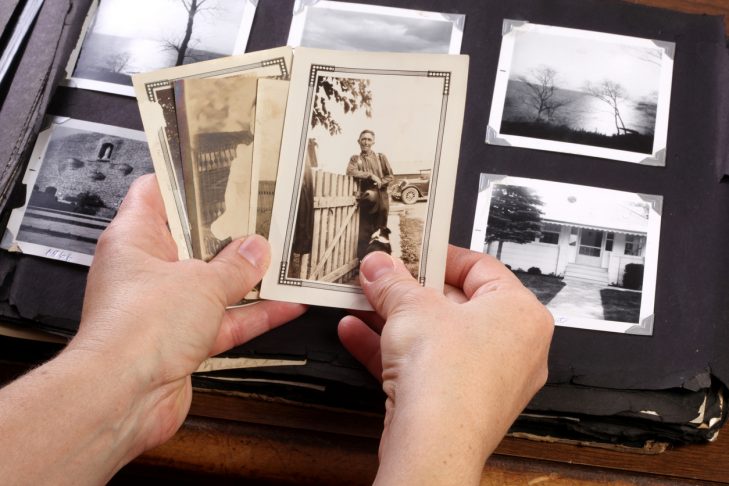
What if the teenager reading about immigration discovers that a great-grandparent arrived in Boston speaking almost no English? What if a family name was changed somewhere along the way? What if a grandparent remembers a town that now has a different name—or belongs to a different country? What if an old photograph contains people no one in the family can identify anymore? And what if the answer to a history question begins with calling Grandma?
This fall, Jookender Community Initiatives is launching Put Your Family Back Into History, a pilot online research program for students in Grades 7–11 who want to investigate history through their own families. It is not a traditional genealogy class, and it is not a competition to see who can construct the biggest family tree. Instead, the family tree becomes a starting point.
Students begin with whatever they know. For one teenager, that may be six generations of names, photographs, documents, and carefully preserved family stories. For another, it may be only parents and grandparents and a vague story about someone who came to America long ago. Both are equally valid places to begin. From there, each student develops an individual research path.
They may interview parents and grandparents, examine old photographs and documents, search historical databases and archives, investigate immigration records, identify villages and cities where relatives once lived, and learn what Jewish life looked like there.
Then comes the larger question: What was happening around my family, and how did history shape their lives—and eventually mine?
A Family Fact Is Not Yet History
Imagine that you know your grandfather survived the Holocaust. Perhaps that is one of the few facts everyone in the family knows because, decades later, he receives an annual compensation payment from Germany. But that may be where the story ends.
Your grandfather does not talk much about what happened. Perhaps he does not want to. Perhaps he simply cannot remember very much because he was a small child at the time. Eventually, however, you collect a few fragments.
You learn that his father was a construction worker. The family lived in Kyiv. After the war began, they were evacuated eastward in a freight train, first to the Volga region and eventually much farther east, to Tomsk in Siberia. Writing those sentences down is not the research project. It is the beginning of one. Now the student has questions.
What did Kyiv look like when this family lived there? What happened to Kyiv’s Jewish population after the German invasion? Who was evacuated, when, and under what circumstances? What was it actually like to travel east in an overcrowded freight train with a small child during wartime?
Then there is the Volga region. The student discovers that ethnic German communities had lived along the Volga for generations. Suddenly another set of questions appears. Who were the Volga Germans? How and why had their ancestors settled there? What languages did they speak? What kinds of work did they do? What happened to these communities after Nazi Germany invaded the Soviet Union? How did wartime fear, Soviet policy, shortages, displacement, and suspicion affect relationships among people suddenly forced into the same places?
And then a tiny piece of family memory becomes especially important. Perhaps the family remembers that the child’s grandmother desperately needed someone to take them in. A local German family did not want to accept Jewish evacuees. So the grandmother, who was blond and spoke Yiddish—and could therefore understand and speak some German—claimed that she herself was German and that the older people traveling with her were Russians who had raised her. The story worked. The German family agreed to give them shelter, including the little boy who would one day become your grandfather.
Now the student’s job is not simply to repeat this remarkable family story. It is to investigate the world in which such a story could have happened. Why might a local family have been reluctant to shelter Jewish strangers? Was antisemitism involved? Fear? Scarcity? Political suspicion? The simple reality that people themselves had too little food and space? Could several factors have existed at once?
What was happening to Soviet Germans at precisely that moment? How much of the family story can be verified through historical sources, and which parts survive only through family memory?
Even the grandmother’s improvised identity becomes something to investigate. How closely related were Yiddish and German? Would knowing Yiddish realistically have helped her communicate? What did clothing, accents, appearance, documents, and language mean in a society where people were constantly trying to determine who belonged to which group?
Then the family moves again, this time to Tomsk. So the research follows them. What was wartime Tomsk like? Why were so many people and institutions relocated eastward? Where did evacuees live? What did they eat? What work was available? What did winter mean for a family arriving from Kyiv? Were there Jewish communities there? Schools? Synagogues? Other refugees?
Slowly, something changes. The project is no longer a list: My grandfather was born in Kyiv. He survived the Holocaust. His family was evacuated to the Volga region and then to Tomsk.
Instead, students begin to reconstruct a world. That is what we mean by putting your family back into history.
We want students to go beyond names, dates, and locations. We want them to understand the atmosphere surrounding the people they are researching: what people around them feared, what choices were available, what prejudices existed, what food was scarce, what languages could be heard in the street, what political decisions were being made hundreds of miles away, and how those decisions reached an ordinary family.
Sometimes one remembered sentence from a grandparent may require days of historical research before a student truly understands what that sentence means.
And just as importantly, students will learn to distinguish between what the family remembers and what historical evidence can establish. Family memory is extraordinarily valuable, but memory, documents, and historical scholarship are different kinds of sources. When they agree, the picture becomes richer. When they conflict, the conflict itself becomes part of the research.
This is not about turning teenagers into professional historians. It is about teaching them to become curious enough to ask one more question. And then another.
Not a 100-Page History Book
None of this means that we expect a seventh- or 10th-grader to produce a 100-page historical treatise—or to investigate every branch of the family tree down to the smallest detail. Quite the opposite.
We expect most students to begin with fragments. A photograph. A name. A city. A few dates. Something Grandma remembers. Something Grandpa refuses to talk about. A document nobody has looked at for years. A family story that everyone has heard but nobody has ever checked. Perhaps a surprising discovery in an archive or online database. The student can put those fragments together into a brief outline of the larger family journey. But then we want them to choose one piece of that journey that genuinely makes them curious and take a much closer look.
It might be the three weeks a great-grandmother spent crossing Europe after the war. The New York neighborhood where a great-grandfather opened his first store. A family’s escape from Kyiv. A childhood in a Soviet communal apartment. A Moroccan Jewish family’s departure for Israel. A relative who arrived at Ellis Island alone. Or one mysterious photograph taken in a town whose Jewish community no longer exists. That one episode becomes the student’s window into the past.
Research the place. Find photographs and maps. Read newspapers, memoirs, historical accounts, and archival materials. Learn what people ate, wore, feared, talked about, and saw around them. Find out what was happening politically and socially. Understand what choices someone in that situation actually had. And then tell the story.
We sometimes describe the goal this way:
Imagine you could borrow a time machine, travel back for just one day, and quietly follow your own family through that moment in their lives.
What would you see when you stepped out?
What would the street look like? What language would people around you be speaking? What would be in the newspapers? What would your relatives be worried about that morning? Where would they be going? Who would they meet? What would they know about what was happening—and, just as importantly, what would they not yet know? Then come back to the present and document what you saw.
Of course, our students do not actually have a time machine. Their reconstruction has to be built from evidence, and they must be clear about what is documented, what comes from family memory, and what is their own careful interpretation. But we want the final project to feel as though they went there. Not an encyclopedia of the entire family. Not 100 pages of names and dates.
One piece of family history, researched deeply enough that, for a few minutes, the rest of us can travel back with them.
Independent Research – But Not Alone
The program runs online from October through May, making it open to students throughout the United States, with a particular focus on Massachusetts.
Students will work independently for approximately four hours per week and meet with a program mentor approximately every two weeks. Whenever schedules allow, students will also meet as a group, giving them a chance to compare discoveries, research methods, dead ends, and the occasional family mystery.
Interfaith and multicultural families are welcome. No single version of a Jewish family story exists, especially in America today. A student’s research may cross countries, religions, languages, ethnicities, and continents. And sometimes students may discover very little. That matters, too.
A missing document can become a historical question. Why did the record disappear? Why did the family change its name? Why did relatives stop speaking a language? Why did no one talk about a particular person or period? What happened to the Jewish community in a town the family left behind? Good research is not only about finding answers. It is also about learning which questions to ask.
Turning Research Into a Story
By the end of the program, each student will turn the research into a visual project.
That could be a short documentary, video essay, presentation, vlog, digital story, multimedia timeline, or another format that allows the student to tell the story in their own way. The goal is not simply to say, “These were my great-grandparents.” The challenge is to make an audience understand what it may have felt like to be them – while remaining careful about the difference between documented history, family memory, and interpretation.
And Yes, There Are Awards
An independent Jookender committee will review the completed projects based on the quality of the research, use of sources, historical thinking, and the student’s ability to connect a family story with the larger world.
The First Place Student Research Award is $1,000. If the program has at least six participants, a $500 Second Place Award will also be presented, and if participation exceeds ten students, a $250 Third Place Award will be added. But every student who completes the program also gains a practical benefit.
Participants who complete the full research process and final project will receive a Jookender certificate documenting 140 community hours, reflecting about four hours per week devoted to research, interviews, documentation, historical investigation, meetings, and creating the final educational project. Families should confirm with their schools and future colleges how they recognize outside or community hours.
Perhaps the most important outcome, however, cannot be measured in hours or awards. For eight months, teenagers will have a reason to ask questions that families often postpone. Where did we come from? Why did we leave? What did our family experience? What did our grandparents never think to tell us? And what stories will disappear if nobody asks now?
At the conclusion of the program, students will present their projects to their families and community. In that room—or perhaps beginning much earlier, around a kitchen table—the usual roles may briefly reverse.
The teenager becomes the researcher. The parent becomes a source. The grandparent becomes a witness to history. And a family story that might otherwise have disappeared becomes part of the historical record for another generation.
Put Your Family Back Into History is open to students in Grades 7–11 across the United States. The program runs from October through May, is conducted online, and costs $500 for the full program year. Learn more and register.
This post has been contributed by a third party. The opinions, facts and any media content are presented solely by the author, and JewishBoston assumes no responsibility for them. Want to add your voice to the conversation? Publish your own post here. MORE
